The Hunt for KSM by Terry McDermott
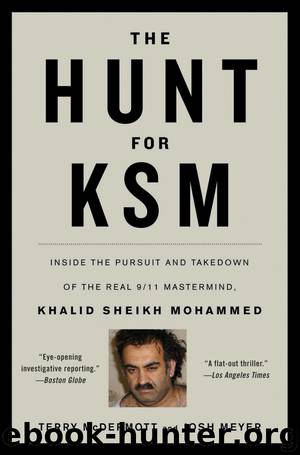
Author:Terry McDermott [MCDERMOTT, TERRY/MEYER, JOSH]
Language: eng
Format: epub
ISBN: 9780316202732
Publisher: Little, Brown and Company
Published: 2012-03-25T16:00:00+00:00
Washington, D.C., Autumn 2001
The FBI’s computer system was almost worse than one could imagine, with virtually no networking capabilities among the fifty-six field offices scattered from coast to coast. Fax machines, diplomatic pouches, and the U.S. Postal Service were the principal means of moving information. Supervisors literally mailed packets of information on the nineteen hijackers to the JTTFs after the attacks. Many agents could not send or receive e-mail from their offices; they had to use private accounts. Louis Freeh, Mueller’s predecessor, boasted about using his computer every day—as a place to put all his Post-it notes; Bureau legend has it that he rarely, if ever, turned it on. He spent most of his time visiting field offices, he would say, not in his office writing memos. The FBI, in many ways the inventor of a sophisticated data-based approach to law enforcement, had slowly become crippled by its inability to access and distribute its own information in useful ways.
It was—in this regard, at least—an organization spectacularly ill-equipped to wage war against a global and shadowy enemy that was better able to employ the technologies of a networked world. What the FBI did have, however, was an institutional knowledge of radical Islam gained from more than a decade of investigation, interrogation, examination, and trial of international terrorists. This history of success was the FBI’s best argument for a major role in the 9/11 investigation. Unfortunately for the Bureau, and with long-lasting impact on American legal culture, the White House of George Bush was not much interested in investigation. It wanted two things—revenge for the attacks and an ability to stop the next one.
Bush told any and all who would listen that the United States was at war and new rules would apply. Vice President Dick Cheney went on national television and warned that the United States would no doubt have to venture onto the “dark side” in order to pursue and punish its enemies. Cheney, more than any other individual, was the architect of the new War on Terror. He made it clear that doubt and nuance had no role to play in this new world.7 The FBI’s customary ways of doing business were not a fit for what Cheney had in mind, and perhaps chiefly for that reason the Bureau lost its status as the preeminent antiterror agency.
In the days immediately following the attacks, George Tenet and his deputies made a forceful case to the administration for allowing the CIA and its network of intelligence agents around the world, who could leverage the help of literally dozens of host countries where Al Qaeda was active, to lead the new war. Their argument: the hardest part wasn’t going to be killing the enemy but finding it—not just the terrorists but their logistics networks, financiers, and supporters and sympathizers. Bush even noted this in his special State of the Union address to an unsettled nation, saying the U.S. would go after those harboring Al Qaeda just as aggressively as it would pursue the terror network itself.
Download
This site does not store any files on its server. We only index and link to content provided by other sites. Please contact the content providers to delete copyright contents if any and email us, we'll remove relevant links or contents immediately.
| Elections & Political Process | Ideologies & Doctrines |
| International & World Politics | Political Science |
| Public Affairs & Policy | Specific Topics |
| United States |
The Secret History by Donna Tartt(19035)
The Social Justice Warrior Handbook by Lisa De Pasquale(12183)
Thirteen Reasons Why by Jay Asher(8885)
This Is How You Lose Her by Junot Diaz(6873)
Weapons of Math Destruction by Cathy O'Neil(6261)
Zero to One by Peter Thiel(5784)
Beartown by Fredrik Backman(5734)
The Myth of the Strong Leader by Archie Brown(5495)
The Fire Next Time by James Baldwin(5428)
How Democracies Die by Steven Levitsky & Daniel Ziblatt(5211)
Promise Me, Dad by Joe Biden(5141)
Stone's Rules by Roger Stone(5080)
A Higher Loyalty: Truth, Lies, and Leadership by James Comey(4947)
100 Deadly Skills by Clint Emerson(4917)
Rise and Kill First by Ronen Bergman(4776)
Secrecy World by Jake Bernstein(4739)
The David Icke Guide to the Global Conspiracy (and how to end it) by David Icke(4697)
The Farm by Tom Rob Smith(4501)
The Doomsday Machine by Daniel Ellsberg(4482)
